As I return to my childhood bookshelf after many wanderings abroad, I am struck by how well these books have weathered my changes. Much of my childhood reading now feels trite, cliche-ridden, or downright boring. These books, by contrast, are now wildly funny. When I first read these in my teens, I cringed through all the veterinary-protagonist's awkward moments, felt more embarrassed than amused by his stories of learning to be a vet in rural England. Now I can laugh and even feel a strange kinship with this city man falling in love with rural farming England. Stories of birthing cows, injecting sows, and operating upon dogs are told with a light touch, never slipping into too much gory detail and never losing a sense of humour about his predicaments. The beauty of the Yorkshire landscape he inhabits is a supporting character throughout the narrative, never more vivid than when he tells the story of his enlisting in the war effort but remaining nostalgic for his beautiful home and wife. This is light reading, gentle on the spirit. It doesn't ask for much from the reader except some compassion and, perhaps, many giggles. The one thing that grates on my new eyes(I am reading this after postcolonial theory after all) is the presence of empire - the ease with which characters leave for Burma, Canada, and Madagascar is a bit disconcerting. India features briefly as a cuisine that he looks forward to but does not get to taste. All of which leaves me wondering how this gentle, relatable storyteller would relate to his postcolonial readers.
Showing posts with label English novel. Show all posts
Showing posts with label English novel. Show all posts
Thursday, February 27, 2020


Friday, June 25, 2010
The Girl with the Dragon Tattoo, The Girl who played with Fire and The Girl who kicked the Hornet's Nest by Stieg Larsson

The stories they tell are fairly straightforward crime fiction. That the villains are mostly 'men who hate women' (the Swedish title for the first book in the series) helped me relate to the stories better, one can't help but feel a sneaking sympathy for villains who are evil for the heck of it. I can hate the villains in these books with all my feminist passion and not feel an iota of grief over their deaths. Cool, no?


See, that's the thing. It's impossible to write hoity-toity reviews, analysing plot and character for these books. They sucked in me in, literally, and continue to have a deep, emotional hold on me.
These books have been translated from Swedish. The fact that they come from another cultural environment - unlike the annoyingly moralistic English or American crime fiction - is beautifully obvious. Highly recommended.
Book journaling 1
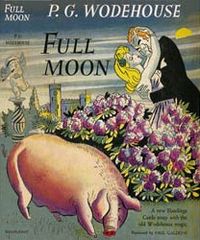
Full Moon by P.G. Wodehouse
Blandings Castle will routinely have young people banished to the rural countryside for being in love with the wrong sort, wily attempts by these 'wrong sort' of lovers to get back together with their beloveds and a misadventure with the Empress, the pig-in-residence, not to mention 'hordes of wild aunts' - all profiled for the discerning reader by the finest craftsman of sentences known to mankind. Full Moon has all these and more.
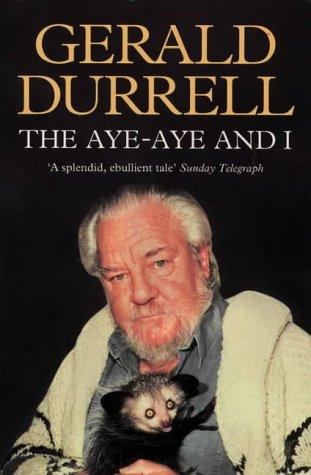
If you've read earlier books by Gerald Durrell, the most striking thing about this novel is the maturing of the 'green movement'. His first books were full of lonely struggles written about with excellent good humour and a great sense of timing. This one constantly refers to organisations and institutions that now fight the good fight to keep planet earth inhabitable for all its inhabitants. Possibly for that reason, the humour does not sparkle as much. The writer himself is aging and writes about the difficulties of old age with his trademark humour. But the thrill of adventure that animated earlier books, where many things hung on a thread, and that gave a sharper edge to the jokes, is missing.

If you're looking for an introduction to manga (like I was), this is not a good book to begin with. If you're looking for an extremely diverse collection of short stories, told in all sorts of innovative visual styles, this one is for you. This is a collection of artists across the world, using manga to tell various kinds of stories. I loved the diversity of it. Only the first story seemed to give me a feel for the the shape of the form. Then I lost myself in multiple stories. The switches between the styles of various artists/cartoonists/writers is extremely disconcerting. This is a true roller-coaster ride - the stories can turn your stomach, leave you in the middle of free fall and set you back on the ground wanting to do it again:)
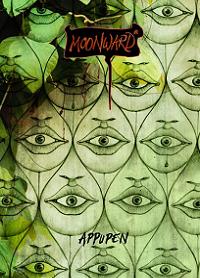
Moonward is a dark, satirical, serious-funny story. An overwhelmingly visual tale. Nothing in this book is fiction. Nothing is real. A dystopia, so clearly shaped by the world we inhabit, that makes you wonder why we don't ask the questions this book asks. This book is a contained scream of rage. Which is also funny. The tale moves like a nightmare between what is real, could be real and might soon be real, between horror, fear and the desperate need for respite. It's savagely funny - holding up the skeletons of our lives for laughs, showing us the graphic realities of our times in gray, black and white. Highly recommended.
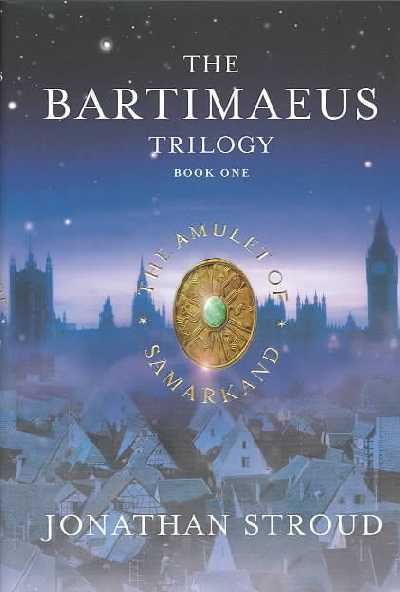
The first of a trilogy - but the other two books are sadly not available on Book and borrow:( The book sounds too much like Harry Potter in the earlier half but the similarities gradually dissolve. Nathaniel is a much more finely developed human-sounding character than Harry. For one, he literally shapes his own destiny. An act of vengeful spite turns into a nightmare of angry magic, death, conspiracies against the government and the development of a tense relationship between Nataniel and, the djinn he invokes, Bartimaeus.
Tuesday, May 18, 2010
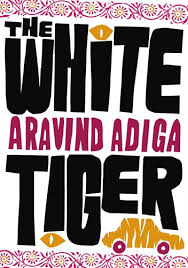
The White Tiger by Aravind Adiga
It's not fair really to compare Aravind Adiga and Arundhati Roy. Yet. They are both angry. They are both Booker prize winners. So I just couldn't help it....
 Aravind Adiga's White Tiger is angry. Angry in a way Arundhati Roy can never be. You see, he is angry in the present tense. Roy is full of nostalgia for lost art forms and pre-World Bank times while being angry at the restrictive conventions of patriarchal traditional lifestyles. She is angry with most of the past and angry with the present for having lost the good bits of the past. The white tiger is relentlessly angry about what he endures now - crushing poverty. A dilapidated old fort near his village means nothing to him. Some poetry allows him breathing space and the strength to break out of the 'rooster coop'. Lost art forms wouldn't move him in the slightest.
The white tiger is also full of annoying cliches, his story hurtles on at an entirely disreputable pace for a literary novel, he is afraid of lizards. What a fucking joke. He keeps saying these first words he learns in English about a lot of things. I agree.
Also, what a relief to read the story of a driver instead of the angsty tales of those who get driven in cars. I like Balram because he is angry and dislike Adiga for all the politically correct reasons - the annoying cliches about poverty, India and China do NOT get validated because they are opinions held by your angry young protagonist. I like Roy because she is so angry but, by gods and all the little fishes, her characters are annoying in their impotence.
The white tiger is also full of annoying cliches, his story hurtles on at an entirely disreputable pace for a literary novel, he is afraid of lizards. What a fucking joke. He keeps saying these first words he learns in English about a lot of things. I agree.
Also, what a relief to read the story of a driver instead of the angsty tales of those who get driven in cars. I like Balram because he is angry and dislike Adiga for all the politically correct reasons - the annoying cliches about poverty, India and China do NOT get validated because they are opinions held by your angry young protagonist. I like Roy because she is so angry but, by gods and all the little fishes, her characters are annoying in their impotence.
Thursday, May 13, 2010
Johnny and the Bomb by Terry Pratchett
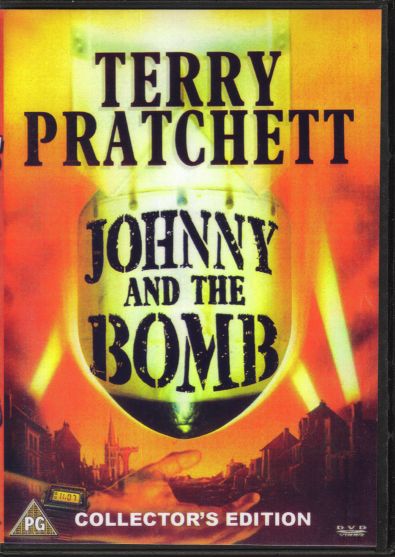
Travelling in time has become a well-worn narrative. There are certain conventions in time travel stories now: If you go back and change something in the past, the present you return to will be either unrecognisable or changed in subtle ways. You require a machine to do time travel in. Johnny and the Bomb shines because of its play with these conventions. Gunk inside a garbage bag in a shopping trolley can transport you in time. Also, if you can run in space, you can also run through time. Who knew? It doesn't overturn all conventions, it plays with some, it adheres to others.
It is imbued with Pratchett's deep respect for human life. A death in a Pratchett novel is not an easy occurrence. His young protagonists are tested to the very limits of their ingenuity in their quest in this book to save twenty lives in a WWII bombing.
This book is a delight because of Pratchett's style of storytelling, always ethical, always critical and always funny.
Sunday, February 7, 2010
Soul Music by Terry Pratchett

Terry Pratchett has a brutal sense of humour that rips into religion, government, pop culture, academia and just about anything that's lying around with a button that says 'Do NOT touch'. Satire, fiction, sci-fi, fantasy, humour - attempting to classify the work of the most brilliant writer I know is not a task for the faint-hearted.
This particular book stars Death, his grand daughter and a boy that seems elvish, a dwarf, a troll and some very angry Guilds. Oh and some wizards who have uncontrollable urges to wear black leather and plaster the walls of their Unseen University rooms with posters.
Tuesday, July 1, 2008
Virginia Woolf, 1937, The Years
Virginia Woolf's novel 'The Years' foreshadows her 'Waves' - only this, her most popular novel, is more accessible, less stream-of-consciousness and a more straightforward, conventional narrative. The story treads lightly through the lives of a family, detailing a youth full of infinite promise, a staid middle age and a repetitive old age of a group of siblings. The shifting relationships, the tone of voice, the tendency to repeat a joke - she paints with a fine brush. The rush of time shocks one initially. This is twenty years later right? and the reader frantically riffles a few pages back. The passage of time that another author would underline with description of gray hair or changing furniture and habits here first flows from a title - 1870, 1890.
Then the changes become apparent. The questions about class, gender and convention lie just under the surface of a shimmering narrative. The older women fume about their restricted lives, while a young woman doctor yearns for a man who is not interested in her in the early part of the 20th century. The Kitty character is deeply attracted to the working class atmosphere of a friend's house, wishes that the brother of the friend who strolls in with a hammer would kiss her. She becomes the Establishment with a capital E, marrying a Duke who becomes India's viceroy or governor general. The colonial enterprise, the first world war make oblique entries into the text - the young man who tells his aunt he is joining the army, the dinner interrupted by an air raid warning over London and the many casual references to India. Eleanor, the spinster older sister visits the Continent, India, plans to visit China next.
There is a faint sadness about the passing of time, or is that brought to text by the reader herself? Is it the fear of mortality that animates the narrative? Or is it a paean to the loss of possibilities because of the restrictions of convention and class?
The children waiting for their mother to die dream of a new dawn at the beginning of the novel and the novel really closes with a dawn. At the end of a long ball a few decades later, the characters welcome the world awakening to itself. Only the dream has dissipated into the claret. The changes are barely visible, the dead dreams all about. Sardonic woman Woolf. How can one not love her?
Subscribe to:
Posts (Atom)